Start With The Buyer Scenario, Not The Product Shape
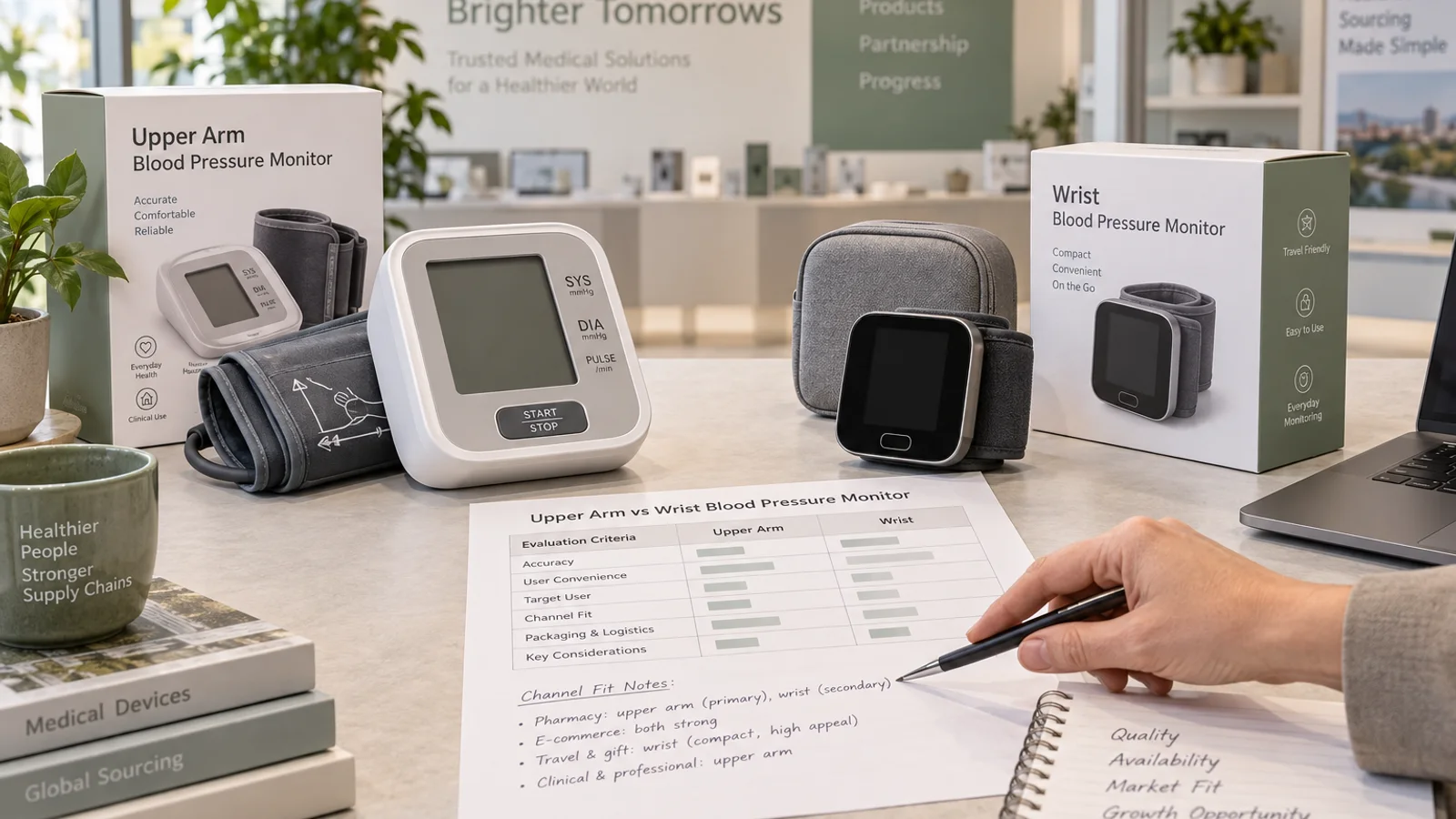
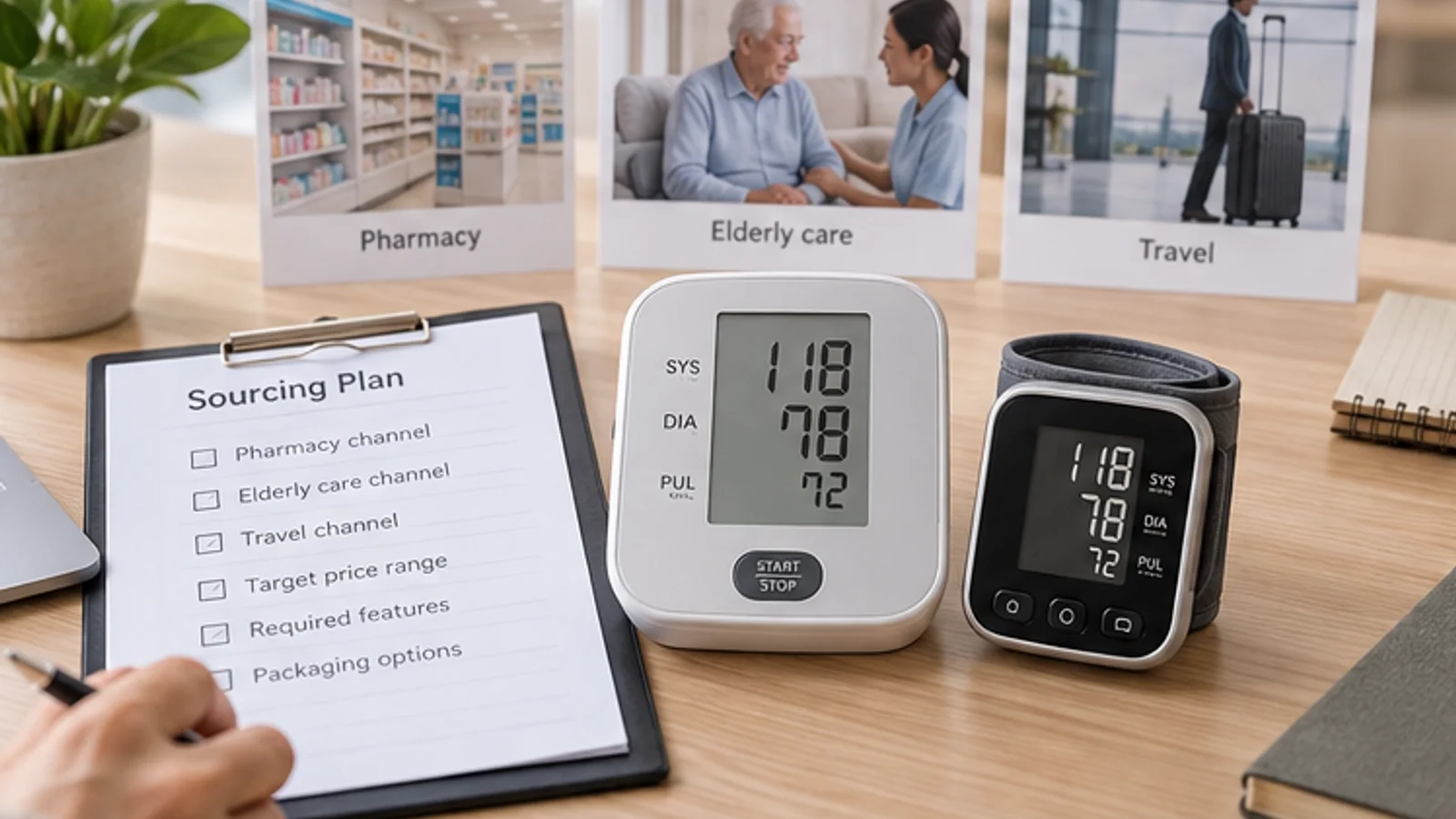
For B2B sourcing, the upper arm versus wrist decision is rarely only a technical preference. It is usually a channel decision. A distributor building a mainstream home healthcare range, an importer preparing a retail shelf program, an e-commerce seller piloting a compact package and a private-label brand planning an OEM line may all evaluate the same product category from different angles. The useful question is not which format sounds better in isolation. The useful question is which format is easier for your target users, sales channel, packaging plan and after-sales explanation to support. Upper arm blood pressure monitors are often reviewed for standard home monitoring programs because the cuff-and-monitor format is widely recognized by buyers and end users. Wrist blood pressure monitors are often reviewed when portability, smaller packaging or simplified storage is important. Neither format should be described as universally better without confirming the exact model, instructions, target market and user expectations.
- Define the target buyer and usage context before comparing models.
- Separate mainstream home monitoring needs from compact retail or travel-oriented programs.
- Review packaging, instructions and sample feedback together with the product format.
- Confirm all claims, certifications and market requirements by selected model and target market.
Where Upper Arm Blood Pressure Monitors Usually Fit
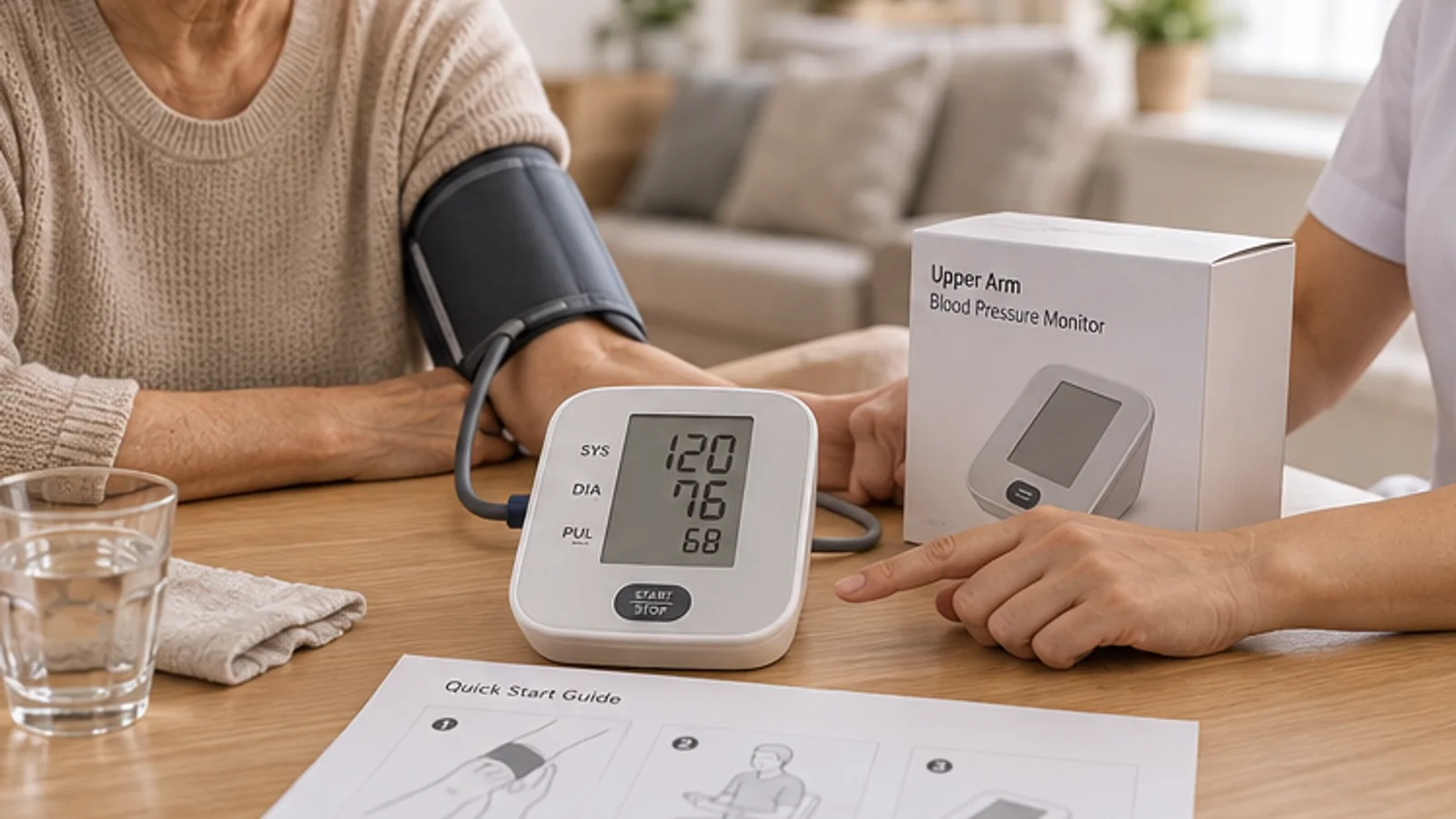
Upper arm monitors are commonly considered for established home healthcare assortments, pharmacy distribution, distributor catalogs and private-label product lines that need a familiar product presentation. The physical cuff, monitor body, display area, button layout and instruction flow are easy to demonstrate in product pages, printed catalogs and retail packaging. For buyers, this can reduce explanation work when the channel already understands the category. Upper arm platforms can also offer more room for front-panel branding, display review and accessory planning, although the exact available options depend on the selected model and project scope. The tradeoff is that the package is usually larger than a wrist monitor program, and the buyer must pay closer attention to cuff size, cuff storage, instruction clarity and user education. If the target audience includes older home users or traditional homecare buyers, an upper arm format may be easier to position, but the final decision still needs sample review and market-specific document review.
- Good fit for mainstream home healthcare and pharmacy-style product ranges.
- Useful when buyers want a recognizable cuff-and-monitor format.
- More space for packaging explanation, accessory review and private-label presentation.
- Requires careful review of cuff sizing, user instructions and package dimensions.
B2B Review Point
Ask whether your channel needs a standard category anchor product or a more compact device format. If the product must sit inside a broader home healthcare range, the upper arm format may be easier to explain alongside thermometers, nebulizers and other home monitoring products.
Where Wrist Blood Pressure Monitors Usually Fit
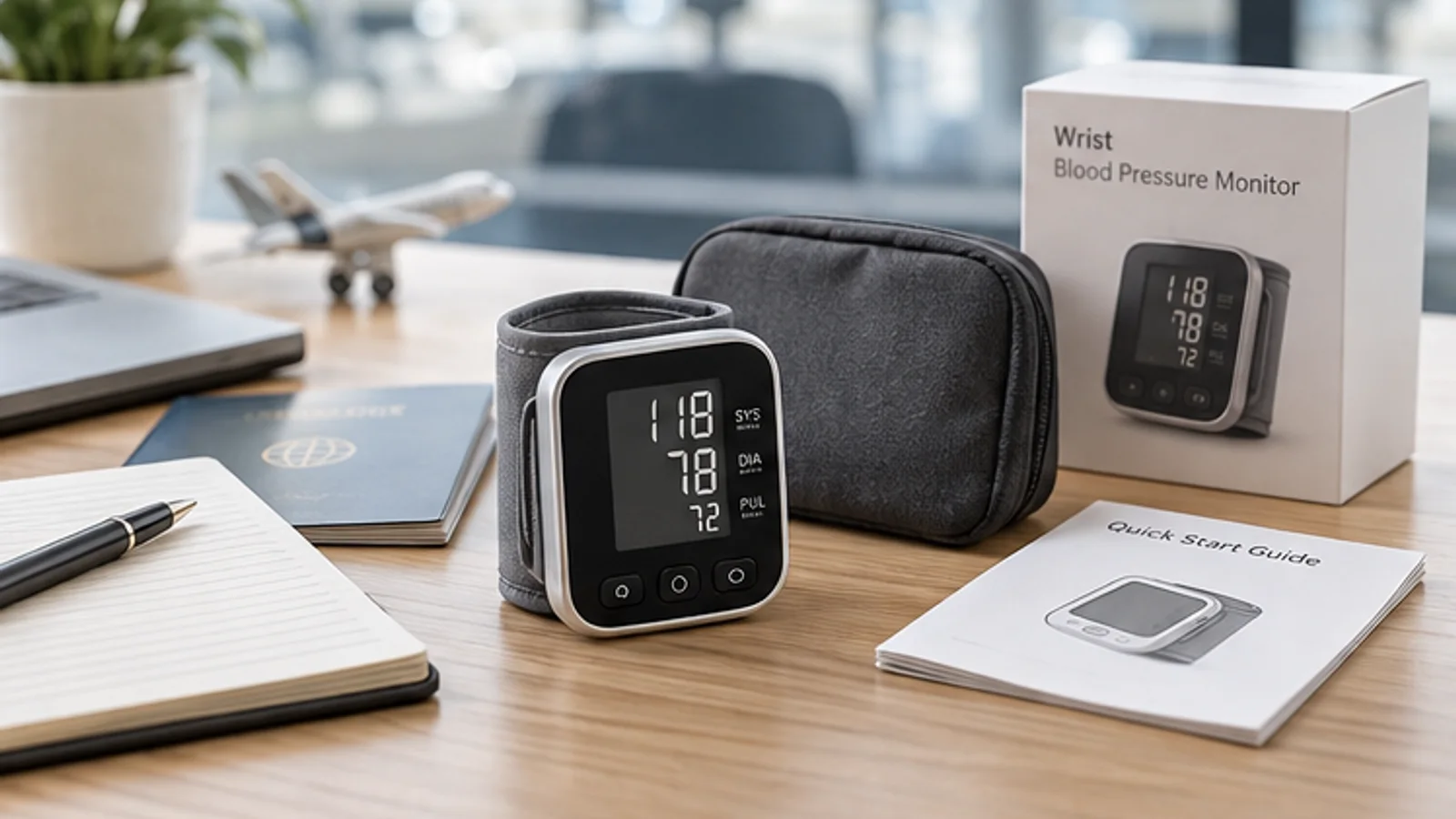
Wrist blood pressure monitors are usually reviewed when compact presentation, portability and storage convenience matter. The smaller product body can support a different retail story: easy to carry, easy to store and easier to package in a compact box. This can be relevant for online channels, promotional programs, travel-oriented wellness ranges or retailers with limited shelf space. At the same time, wrist products need very clear user instructions because measurement position and user handling can affect the buyer's support burden. A product that looks convenient in a catalog can still create after-sales questions if the target users are not comfortable with the operating method. For this reason, B2B buyers should review sample handling, instruction language, packaging explanation and after-sales scripts before deciding whether the compact format is suitable for their channel.
- Good fit when small package size and portability are important.
- Useful for selected e-commerce, promotional or compact retail programs.
- Needs clear instruction design and careful user-positioning explanation.
- Should be evaluated through sample handling, packaging review and channel feedback.
Comparison Table For Channel Selection
A structured comparison helps sourcing teams avoid choosing only from product appearance. The table below is not a medical performance claim and does not replace model-specific validation. It is a procurement planning tool for deciding which format deserves sample review first.
| Decision Factor | Upper Arm Monitor | Wrist Monitor | Buyer Review Question |
|---|---|---|---|
| Primary channel fit | Mainstream home healthcare, pharmacy, distributor catalog and private-label programs | Compact retail, e-commerce, travel-oriented or promotional programs | Which channel will explain and support the product after sale? |
| User communication | Often easier to present as a familiar home monitoring format | Needs clear position and handling instructions | Will the packaging and manual reduce user confusion? |
| Packaging planning | Larger box and accessory space; cuff storage needs review | Smaller box potential; compact kit planning is important | Does the package size fit the buyer's shelf, shipping and bundle plan? |
| OEM presentation | More visible surface and packaging space for private-label design review | Compact branding and instruction hierarchy need careful review | Where should logo, model information and instruction cues appear? |
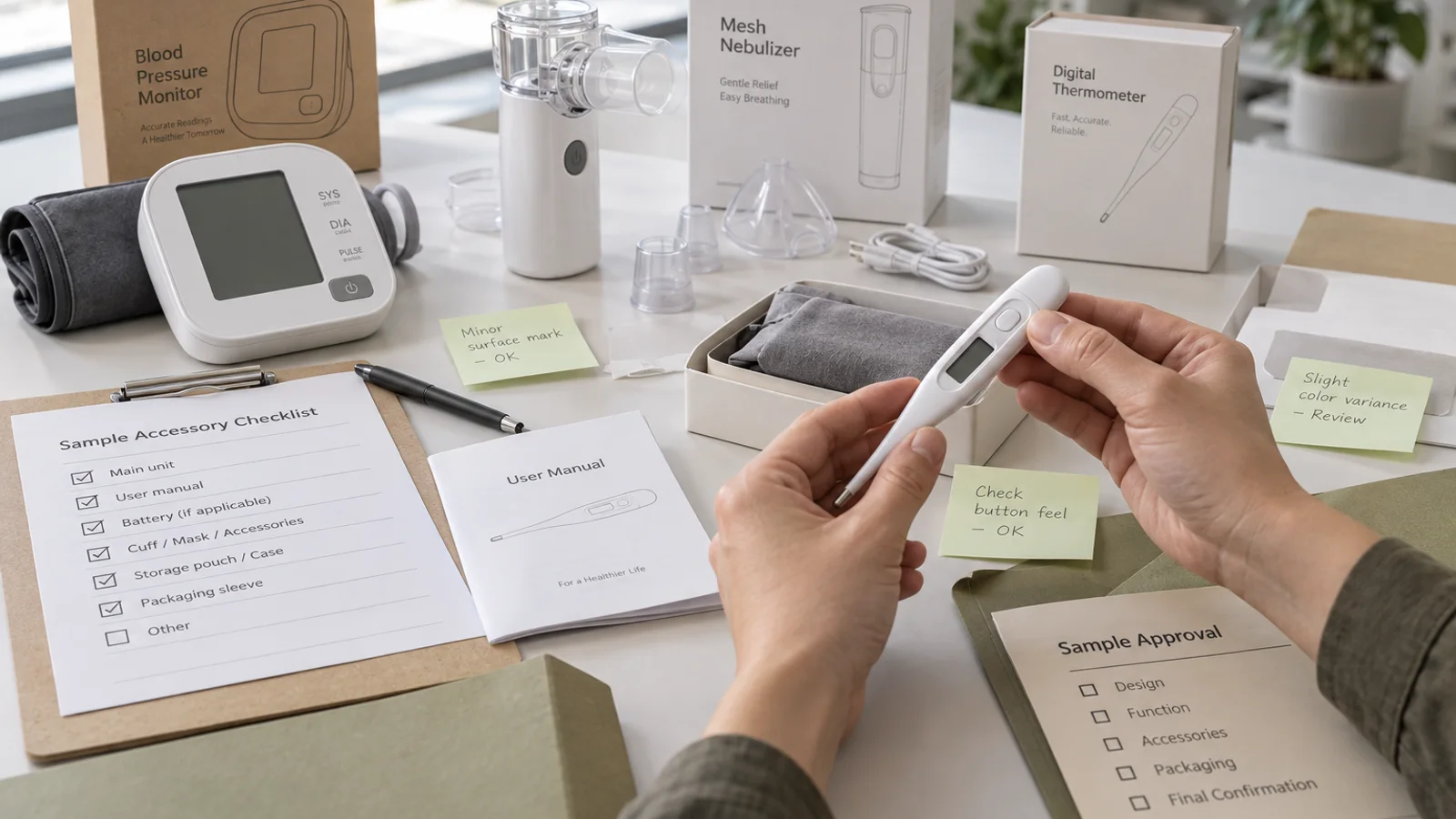
| Sample evaluation | Review cuff comfort, display readability, button layout and accessory set | Review wrist fit, display angle, operation flow and instruction clarity | Which sample creates fewer support questions in the target market? |
| Documentation | Confirm model documents, manual, labeling and market-specific requirements | Confirm model documents, manual, labeling and market-specific requirements | What must be confirmed before quotation or launch planning? |
OEM And Private-Label Decisions To Review Before Quotation
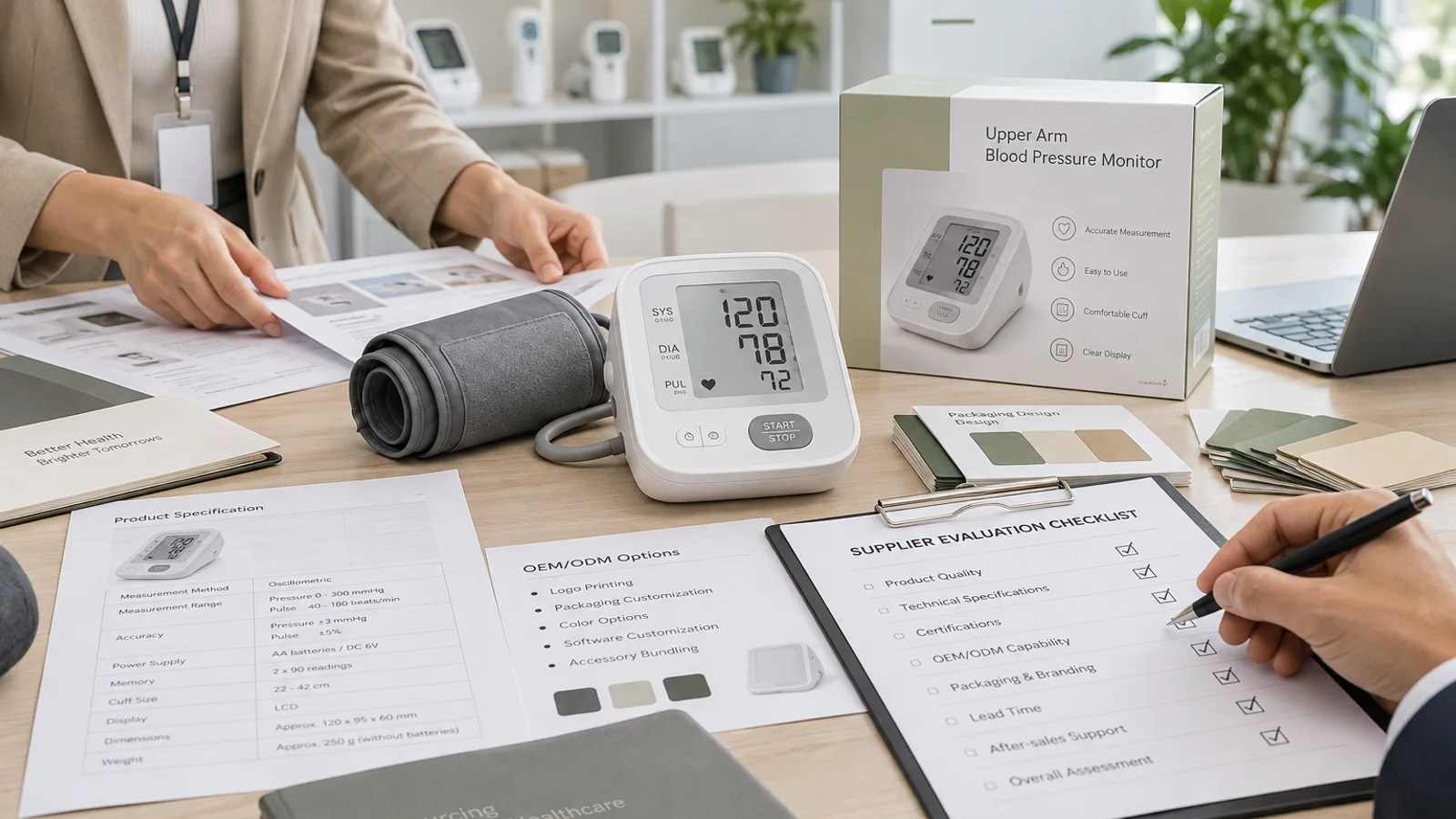
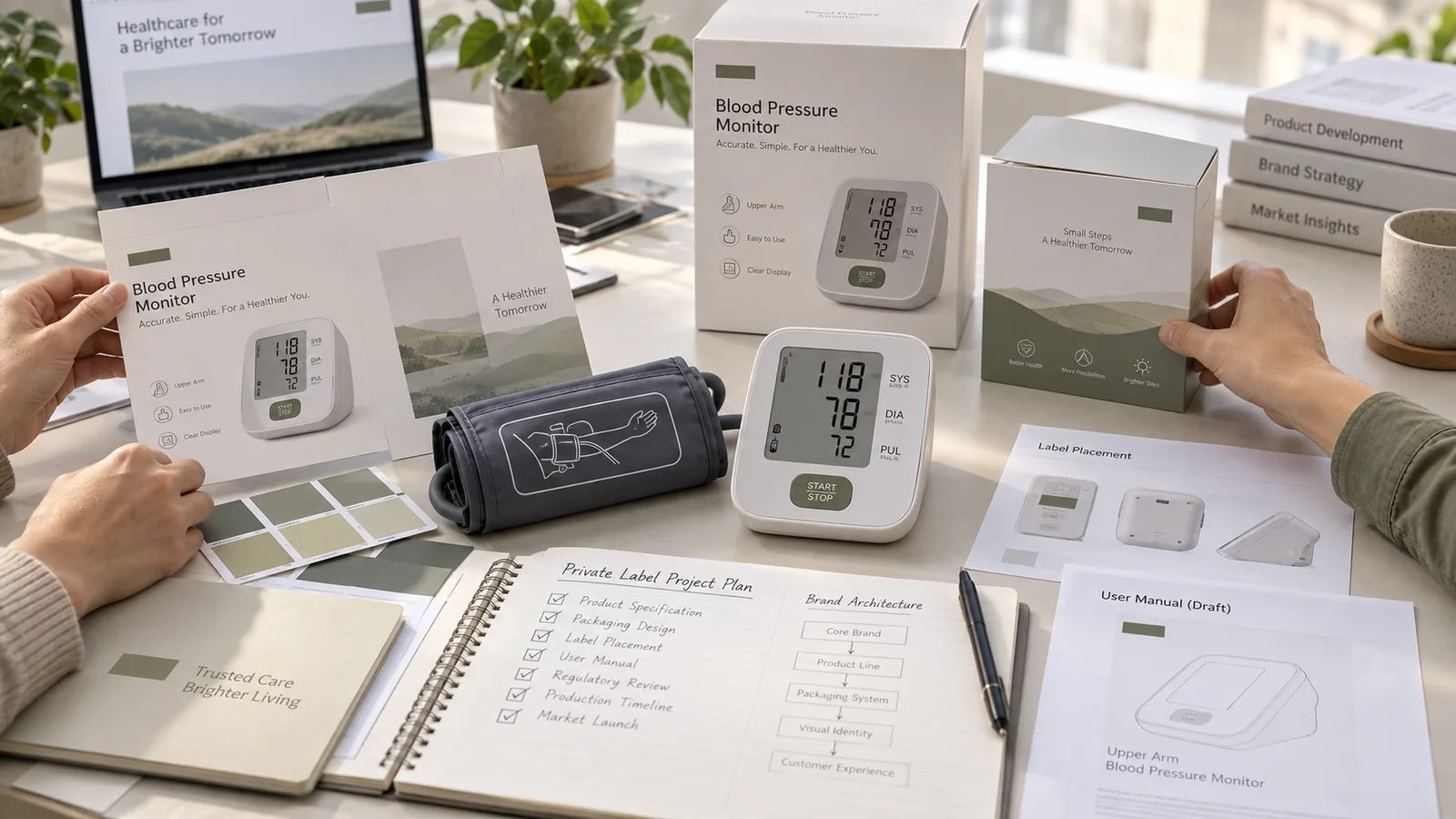
Once the format direction is clear, buyers should connect the product choice with OEM and private-label requirements. A quotation request that only says blood pressure monitor is usually not specific enough for efficient review. The supplier needs to understand whether the buyer is considering an upper arm or wrist platform, the intended sales channel, desired packaging level, manual language needs, target market and any documentation questions. This does not mean every detail must be final at the first contact. It means the RFQ should give enough context for the supplier to recommend a realistic starting product and identify which points need sample confirmation. For example, a distributor may need carton, manual and package file discussion, while an e-commerce seller may prioritize product photos, compact packaging and instruction clarity. A private-label buyer may need logo placement, box structure and label review before sample approval.
- Selected format: upper arm, wrist or both for comparison.
- Target market and sales channel: distributor, retail, online or private-label program.
- Packaging direction: standard packaging review or OEM packaging discussion.
- Document needs: manual, label, product file and market-specific questions.
Information That Improves An RFQ
Share the product format, target channel, estimated order range, expected packaging level and any document questions. Keep the wording factual. Avoid asking for unverified certification, performance or approval claims before a specific model and market have been reviewed.
Quality, Compliance And Claim Review
Blood pressure monitor sourcing also requires disciplined claim control. Buyers should avoid assuming that one format automatically carries the same documents, approvals or market suitability as another. Documentation should be reviewed by selected model, target market and project scope. Packaging and product pages should not imply unconfirmed medical performance, regulatory approval, certification status or market access. A practical buyer review asks what documents are available for the selected product, what label and manual materials need adaptation, and what statements must be checked before publication. This protects the buyer's channel and avoids creating trust problems later. If a target market has specific regulatory, importer or labeling expectations, the buyer should confirm those requirements through qualified local review instead of relying on generic web content.
- Do not reuse claims from another model without confirmation.
- Review manual, label and package statements before launch materials are prepared.
- Confirm certification and compliance questions for the exact model and market.
- Keep buyer-facing wording accurate, neutral and procurement-oriented.
Brand-Safe Wording Principle
Use careful wording such as documentation can be reviewed by project scope or requirements should be confirmed for the selected model and target market. Avoid language that implies unverified approvals, guaranteed timelines or unverified performance outcomes.
How To Make The Final Sourcing Decision
The final decision should combine channel fit, user handling, packaging feasibility, sample feedback and documentation readiness. If the buyer serves a traditional home healthcare channel and needs a familiar product story, an upper arm monitor may be the stronger first sample. If the buyer needs compact packaging, portability and a focused online or retail offer, a wrist monitor may deserve review. If the buyer is uncertain, the practical approach is to compare one upper arm sample and one wrist sample under the same review framework: target user, channel presentation, packaging, manual clarity, product handling and document needs. This creates a stronger sourcing conversation than asking for a general best model because it ties the device format to the buyer's real commercial environment.
- Shortlist by channel and user scenario first.
- Review samples with the same handling and packaging criteria.
- Check documentation and claim language before market-facing materials are finalized.
- Use OEM discussion to align product, packaging, manual and launch requirements.
CTA For Buyers
Linova-X can support sourcing discussions around blood pressure monitor platforms, sample review, OEM packaging direction and project documentation. Share your target market, preferred channel and product format direction so the team can help review a practical starting point.
Useful Links For Sourcing Review
FAQ
Is an upper arm blood pressure monitor always better than a wrist monitor?
No. For sourcing work, the better choice depends on the target user, sales channel, package plan, instruction clarity and selected model. Avoid making universal performance claims without model-specific review.
When should a buyer shortlist a wrist blood pressure monitor?
A wrist monitor may be worth reviewing when compact packaging, portability and simple storage are important to the channel. Buyers should still check sample handling and instruction clarity carefully.
What should be included in a blood pressure monitor OEM inquiry?
Include the preferred format, target market, sales channel, estimated order range, packaging direction, manual or label requirements and any document questions that need project review.
Can certification or market access be assumed from the product category?
No. Certification, labeling and market access questions should be confirmed by exact model, target market and project scope. Generic category content should not be treated as regulatory confirmation.