Start With The Market, Not The Factory Profile
A good supplier review starts with the sales environment you need to serve. A distributor selling to pharmacies, an importer supplying home-care channels and a private-label brand building an online range may all need blood pressure monitors, but they usually require different product presentation, packaging depth, documentation review and after-sales expectations. Before comparing suppliers, define whether your market needs upper-arm monitors, wrist monitors, connected models, simple home-use models or a focused private-label format. This keeps the review practical and prevents the discussion from becoming a generic factory comparison.
- Clarify the target channel, target user and preferred product format before requesting quotations.
- Use supplier claims only after they are connected to a specific model, document set and sourcing requirement.
- Separate brand presentation, product selection and compliance review so each topic can be checked properly.

Review Product Range By Use Case
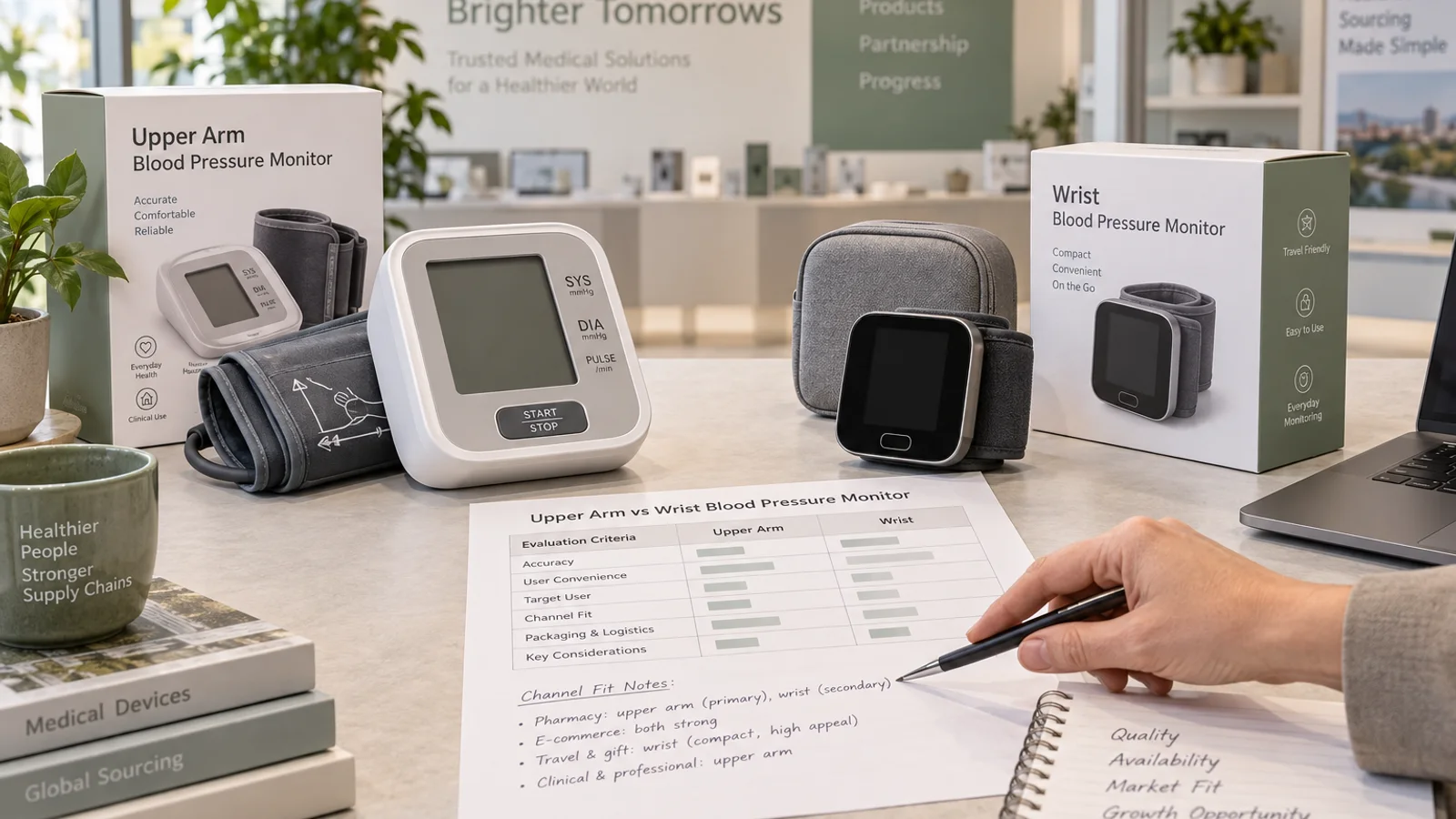
Blood pressure monitor sourcing is not only a choice between models. Buyers need to understand how a supplier organizes its range and whether that range fits the customer scenario. Upper-arm monitors are commonly selected for home monitoring programs, pharmacy retail and distributor catalogs where a familiar format is important. Wrist monitors may be considered when compact size, travel convenience or smaller packaging is relevant, but the buyer should review instruction clarity and positioning requirements carefully. The supplier should be able to explain the role of each platform while keeping performance language tied to confirmed product documentation.
- Match upper-arm, wrist or compact models to the buyer's real channel position.
- Check whether product materials explain user fit, setup and measurement workflow in clear language.
- Avoid judging a range only by the number of models; focus on whether the available platforms support the buying plan.
| Scenario | What To Review | Why It Matters |
|---|---|---|
| Pharmacy or distributor catalog | Stable model platform, packaging clarity and document availability | Supports repeat purchasing and channel presentation. |
| Private-label home-care brand | OEM options, manual and label review, sample confirmation process | Connects brand requirements with practical sourcing execution. |
| Online retail assortment | Product explanation, carton protection and image-ready packaging | Helps avoid listing confusion and post-sale support friction. |
| Market entry review | Model documentation, intended market and compliance discussion | Keeps regulatory and claim questions tied to the exact project. |
Check OEM Support Before You Discuss Price
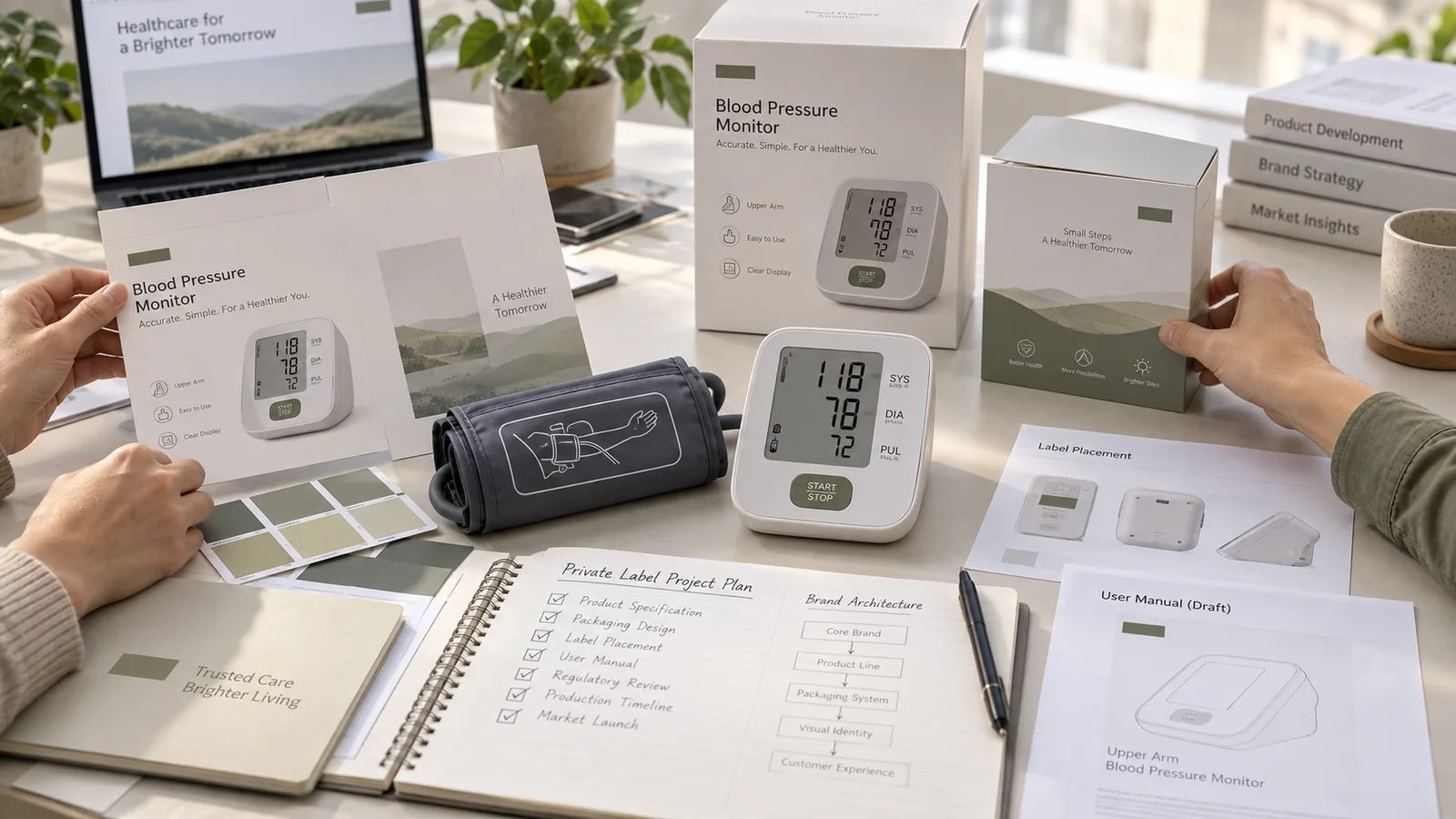
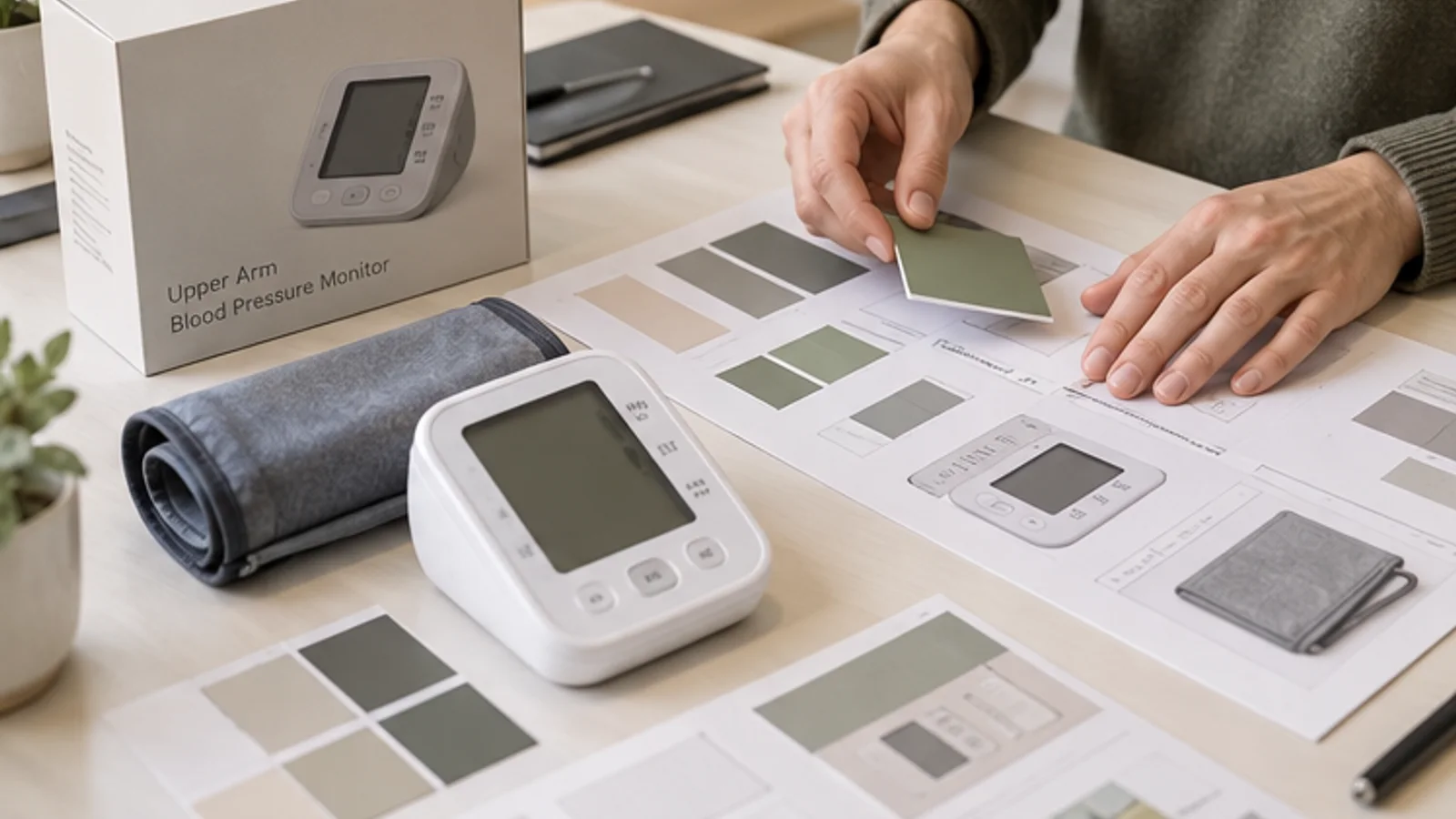
Price comparison is useful only after the buyer understands what is included in the project scope. For private-label projects, the supplier should clarify which parts of the product presentation can be reviewed, such as carton artwork, product label, user manual language, color direction, accessory package and sample confirmation. This does not mean every detail can be changed for every model. It means the buyer and supplier should define a realistic customization path early, then confirm what can be supported for the selected product platform and target market.
- Ask what brand materials can be reviewed for the specific model you are considering.
- Confirm whether sample approval, packaging review and document review are part of the normal project workflow.
- Keep OEM requests specific so the supplier can separate available options from items needing project-by-project review.
Use Documents To Review Supplier Readiness
Documentation is one of the clearest ways to evaluate supplier maturity. Buyers should not ask for generic certificates first and stop there. A stronger review connects the selected model to product files, manual drafts, label materials, quality-system information and inspection or validation materials that are actually available for discussion. For regulated or sensitive markets, the buyer should treat documentation as a project review topic. Any approval, registration or market-access question needs confirmation by product model and target market rather than broad wording in an article or sales message.
- Request documents by model and market instead of relying on company-level statements alone.
- Review manual, label and packaging content for clarity before final artwork approval.
- Ask how inspection and shipment review records are handled for confirmed orders.

Evaluate Communication Around Risk
A reliable supplier does not answer every sourcing question with a simple yes. The better signal is whether the team can explain which items are standard, which items require project confirmation and which items depend on the target market. This matters for blood pressure monitors because packaging claims, manuals, labeling language and import documentation can affect the buyer's launch plan. Look for clear escalation paths, responsible contacts and written follow-up after sample or document review. These habits reduce misunderstanding before cost, packaging and shipment discussions become urgent.
- Prefer clear project notes over vague assurances.
- Ask suppliers to document open questions after each review call.
- Treat unresolved compliance, claim or market questions as items for formal project confirmation.
Turn The Review Into A Sourcing Decision
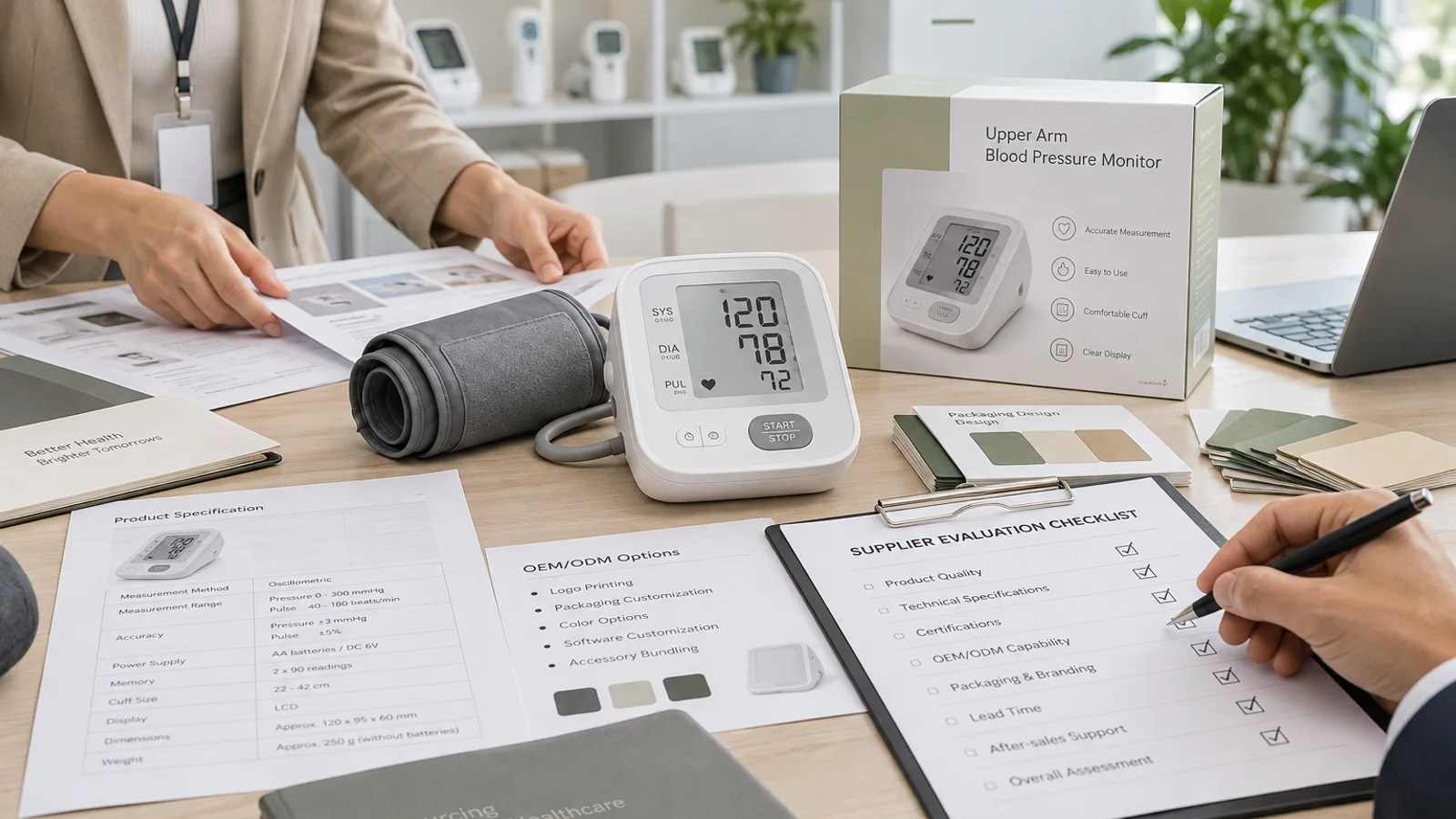
The final supplier decision should combine product fit, OEM scope, documentation readiness, sample review quality and communication discipline. Buyers can then compare suppliers on the same basis instead of comparing incomplete quotations. A supplier that provides a slightly longer but clearer review may be a better project partner than one that replies quickly with broad, unverified statements. For Linova-X projects, the most useful starting point is a target model direction, target market, estimated purchasing plan, packaging expectations and required documentation list. That information allows the team to review the sourcing path with more precision.
- Build a short comparison matrix before selecting a supplier.
- Keep the first quotation discussion connected to confirmed product and document scope.
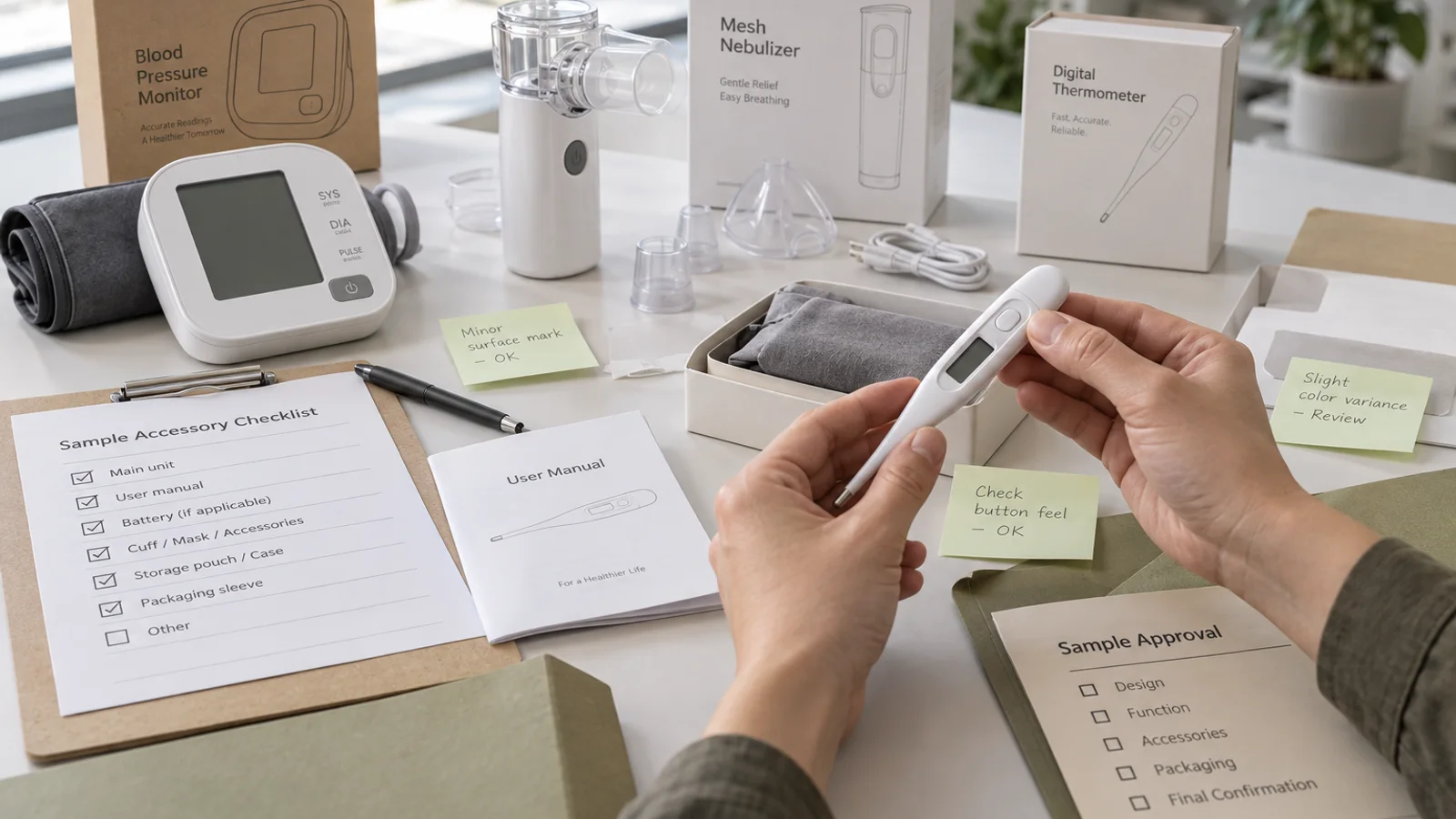
- Use sample review to validate the product, packaging and communication process together.
Useful Links For Sourcing Review
FAQ
Should buyers choose a blood pressure monitor supplier by price first?
Price should be compared after the buyer confirms product format, OEM scope, sample review needs and documentation expectations. Otherwise quotations may not cover the same project scope.
What documents should be discussed during supplier evaluation?
Buyers should review available product files, user manual and label materials, packaging information, quality-system materials and any market-specific documentation required for the selected model.
Can one supplier evaluation apply to every market?
No. Market access, labeling language, import documentation and channel expectations vary. The review should be tied to the target market and product model.
What should be prepared before contacting Linova-X?
Prepare the target market, product type, estimated quantity, private-label needs and any required document list so the sourcing review can start from a clear project brief.