Quality Control Should Be Reviewed By Stage
Factory quality control is easier to understand when buyers separate the process into stages. Incoming inspection looks at materials and components before assembly. Assembly inspection reviews workstations and in-process handling. Product validation checks selected functions and product performance according to available procedures. Final inspection reviews finished goods, accessories, packaging and shipment preparation. This staged view helps buyers ask better questions without assuming that one photo, certificate or factory statement proves the whole process.
- Ask which checks apply before, during and after assembly.
- Connect quality questions to the selected product category and order scope.
- Review inspection materials as sourcing evidence, not as unverified guarantees.
Incoming Checks Help Protect Assembly
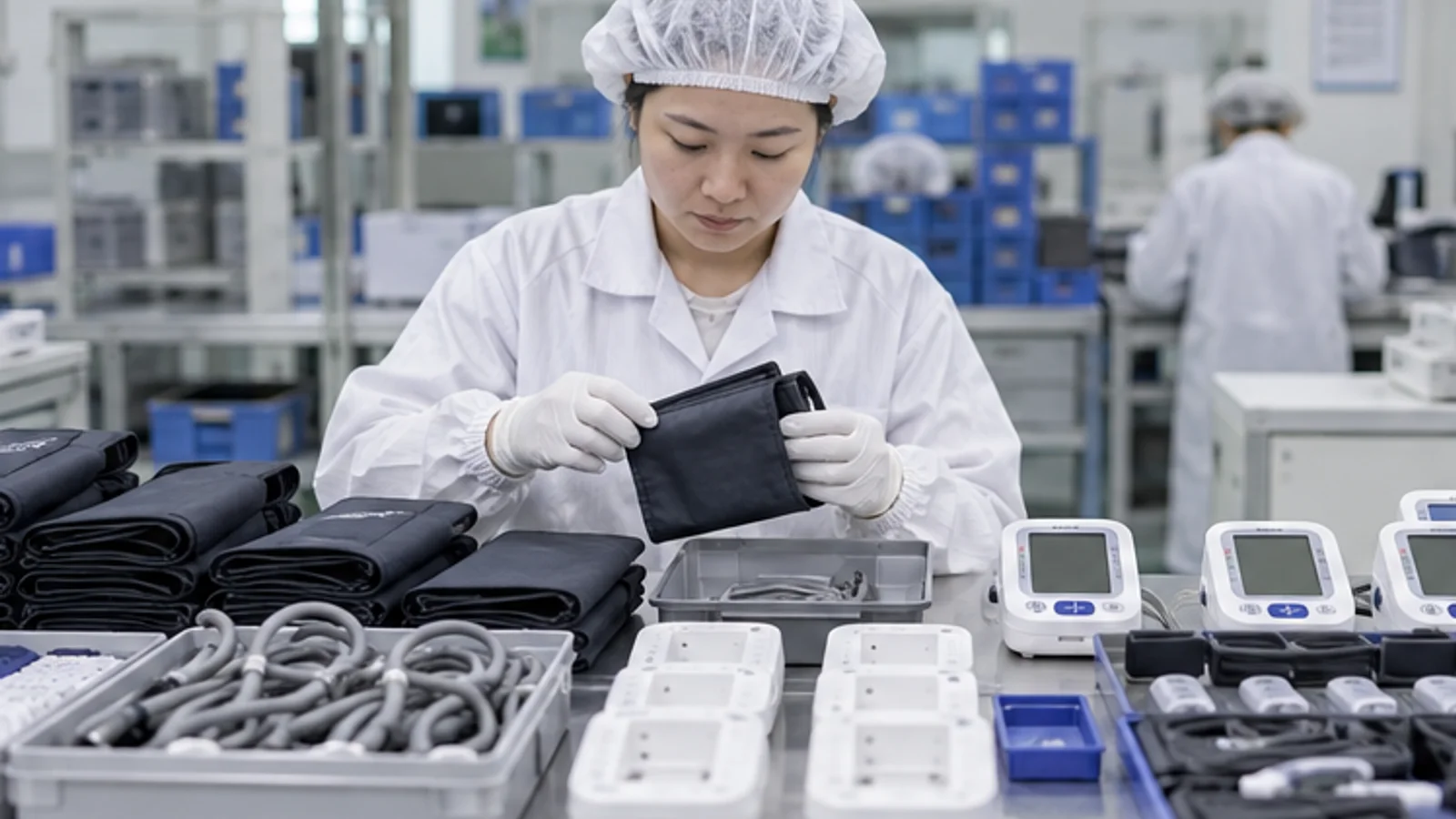
Incoming inspection is the first point where the factory can review whether parts, accessories, labels or packaging materials are ready for production handling. For home healthcare devices, this may involve shells, electronic components, cuffs, tubing, masks, cartons, manuals or other project materials depending on the product. Buyers do not need to see every factory record before placing an inquiry, but they should understand whether the supplier can discuss incoming material control for the selected category.
- Review material and component handling for the product category under discussion.
- Ask how nonconforming materials are separated or reviewed when relevant.
- Keep buyer requests focused on evidence available for the confirmed project.
| Stage | Main Review Point | Buyer Value |
|---|---|---|
| Incoming inspection | Materials, components and project materials before assembly | Reduces risk before production handling. |
| Assembly inspection | Workstation checks and in-process product review | Keeps manufacturing issues visible during production. |
| Product validation | Function or performance checks according to available procedures | Supports review of selected product behavior. |
| Final inspection | Finished goods, accessories, packaging and carton readiness | Helps confirm shipment preparation. |
| Document review | Inspection records and project materials | Supports buyer sourcing evaluation. |
Assembly Inspection Looks At Process Discipline
Assembly inspection is not only a worker looking at a finished product. It should show whether workstations, handling steps, product placement and basic process checks are controlled during manufacturing. For small home healthcare devices, in-process review may involve the product body, accessory package, display or housing condition, assembly fit and operator handling. Buyers should ask suppliers to explain the review points relevant to the selected model instead of requesting a generic production-line photo.
- Look for clear product handling and workstation organization.
- Ask which assembly checks are relevant to the chosen product category.
- Review process evidence alongside sample and document review.

Product Validation Should Match The Device
Product validation should be discussed by product category and model. A blood pressure monitor, nebulizer, thermometer, air mattress or body scale may require different functional checks and different supporting records. Buyers should avoid asking for one universal validation report covering unrelated products. Instead, they should ask what inspection and validation processes are available for the selected product. If a buyer has specific target-market or importer requirements, those should be shared early so the supplier can review what is available and what needs project confirmation.
- Ask for validation information connected to the selected product model.
- Review product validation separately from packaging and shipment checks.
- Avoid making clinical or performance claims unless they are supported by confirmed documents.

Final Inspection Connects Product And Packaging
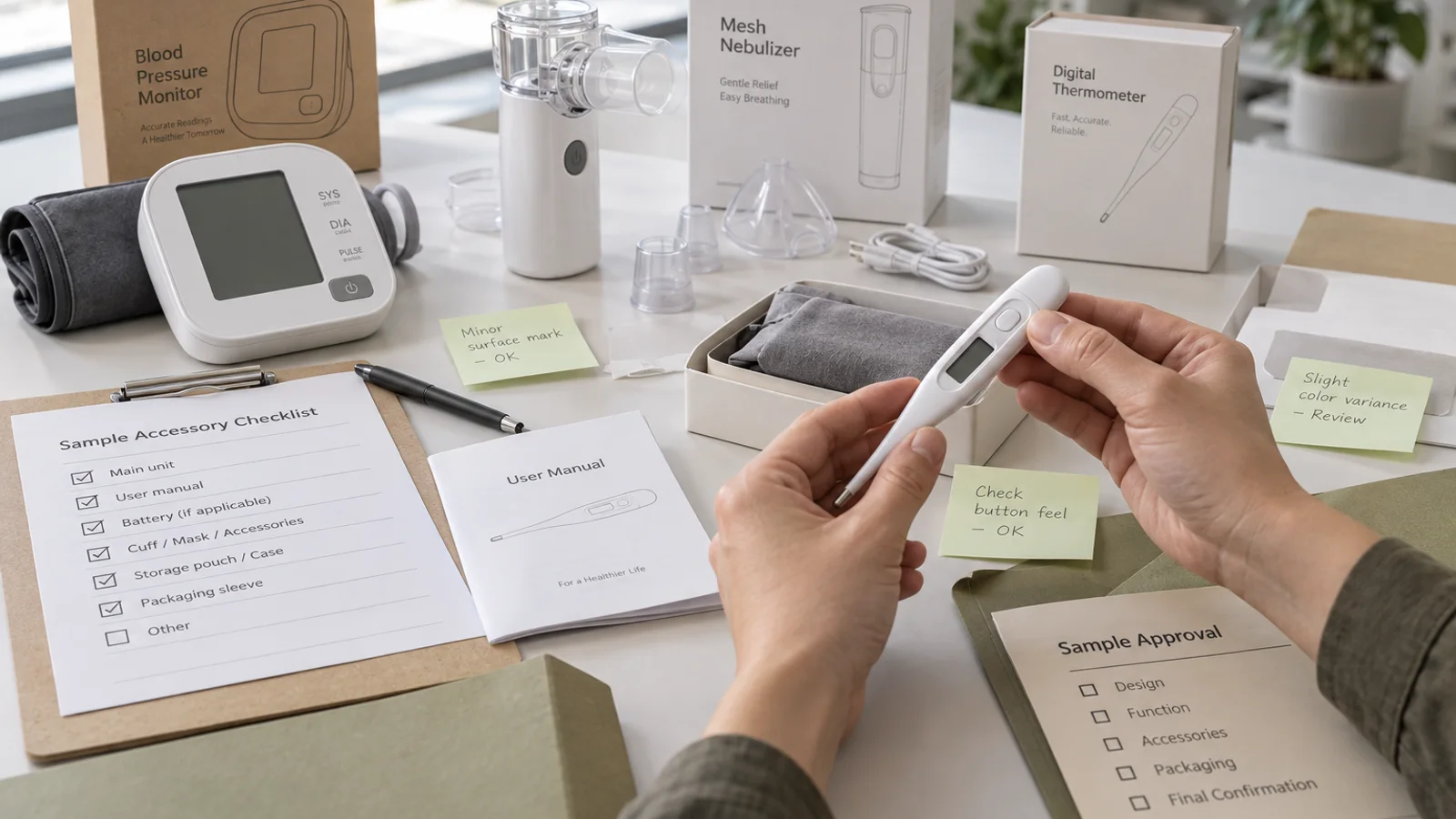
Before shipment, final inspection should look at finished goods, accessory completeness, product appearance, packaging materials, manual placement, carton information and order-specific requirements. This step is important for OEM and private-label buyers because packaging and labels often carry buyer-specific information. Final inspection does not replace earlier quality controls, but it helps confirm that the shipped goods match the approved sample and project records.
- Review finished goods and packaging together before shipment preparation.
- Check labels, manuals and accessory placement for the confirmed project.
- Use final inspection records to support buyer shipment review.
Ask For Quality Evidence That Supports The Sourcing Decision
A strong quality discussion is practical and evidence-based. Buyers can ask how incoming inspection, assembly inspection, product validation and final inspection apply to the product category under review. They can also request available quality-system or manufacturing documentation for business review. Linova-X presents inspection information for sourcing evaluation and discusses project-specific records when the product, quantity, market and order scope are confirmed.
- Use staged inspection questions to make supplier review clearer.
- Connect quality evidence to product, market and order scope.
- Keep inspection claims neutral unless backed by confirmed project documents.
Useful Links For Sourcing Review
FAQ
Is final inspection enough to prove product quality?
Final inspection is important, but buyers should understand incoming checks, assembly inspection, validation and document review as separate stages.
Can buyers request inspection records before ordering?
Available evidence can be discussed during sourcing review. Project-specific records depend on confirmed product, order and scope.
Should quality control be the same for every product category?
No. Inspection and validation should be reviewed according to the selected product model and category.
What should OEM buyers check before shipment?
Check finished goods, accessories, packaging, manual placement, label materials, carton information and order-specific requirements.