Build The Range Around Shopper Needs
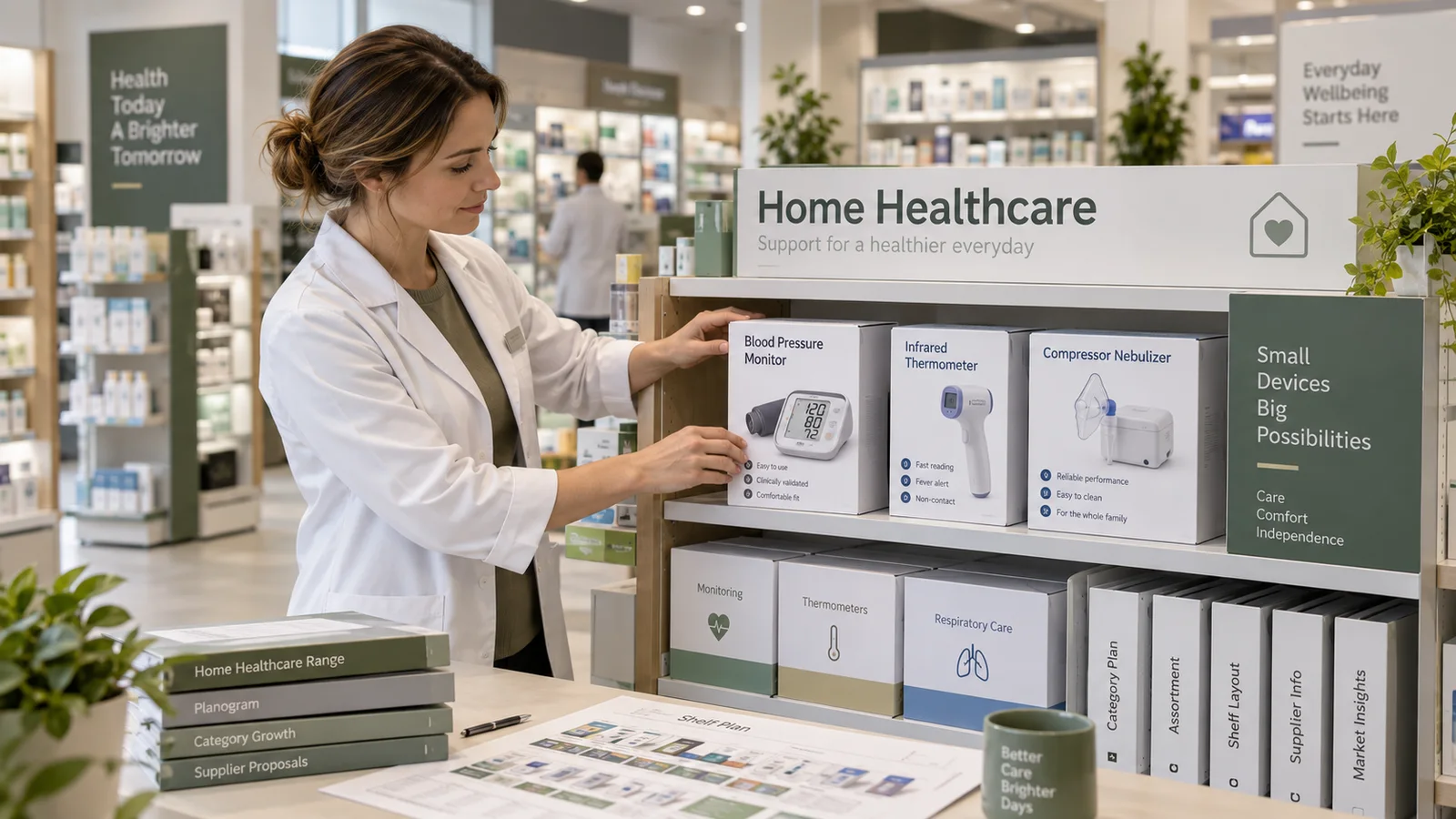
A pharmacy home healthcare range should be organized around practical shopper needs rather than a long list of unrelated devices. Common roles may include daily monitoring, respiratory care, temperature checking, comfort or nursing support and body weight management. A buyer does not need to launch every category at once. The stronger approach is to define which product roles fit the pharmacy channel, what documentation is available and how the range will be presented under the buyer's brand or distribution model.
- Use customer need states to organize the product line.
- Select categories that the channel can explain and support.
- Avoid adding products only because they appear in a supplier catalog.
Define The Role Of Each Product Category
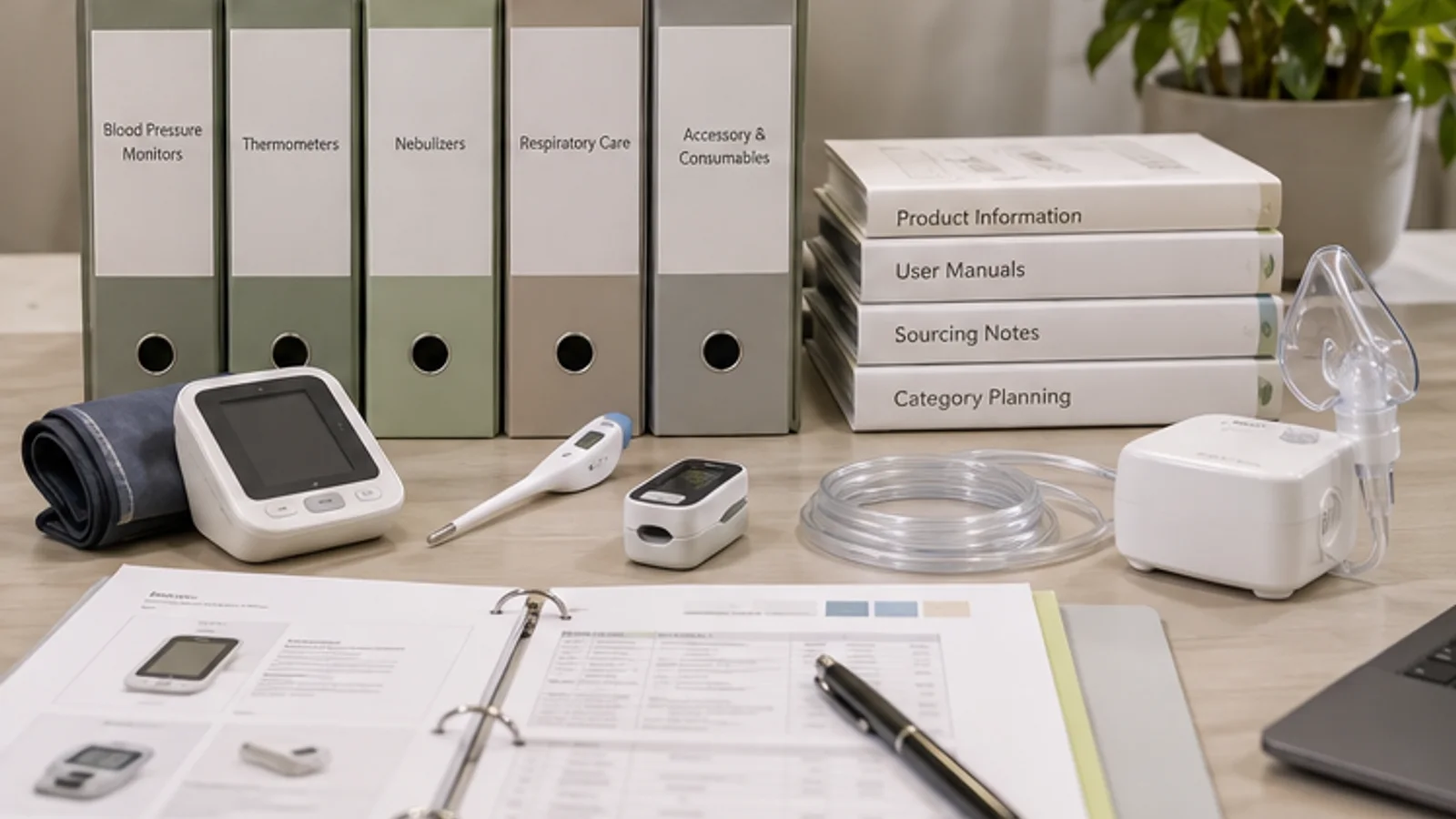
Each category should have a reason to exist in the range. Blood pressure monitors can support home monitoring and pharmacy retail education. Nebulizers can serve respiratory-care assortments when the channel can explain the accessory package and user workflow. Thermometers often fit family care and seasonal demand planning. Body weight scales can support daily health management. Medical air mattresses belong more naturally in nursing, rehabilitation or long-term care channels. The buyer should connect each category to channel demand before discussing packaging style.
- Give every category a channel role and a buyer reason.
- Review whether manuals, labels and product materials support the channel.
- Keep product range planning separate from unverified market-size claims.
| Category | Possible Channel Role | Buyer Review Focus |
|---|---|---|
| Blood pressure monitors | Daily monitoring and pharmacy retail education | Product format, cuff package, manual and display clarity. |
| Nebulizers | Respiratory-care product range | Accessory package, instruction flow and packaging explanation. |
| Thermometers | Family-care and fast temperature checking | Handling, packaging, battery discussion and user guidance. |
| Body weight scales | Daily health management | Design fit, retail packaging and product information. |
| Medical air mattresses | Nursing or long-term care support | Use scenario, accessory package and document review. |
Keep Packaging Consistent Without Hiding Category Differences
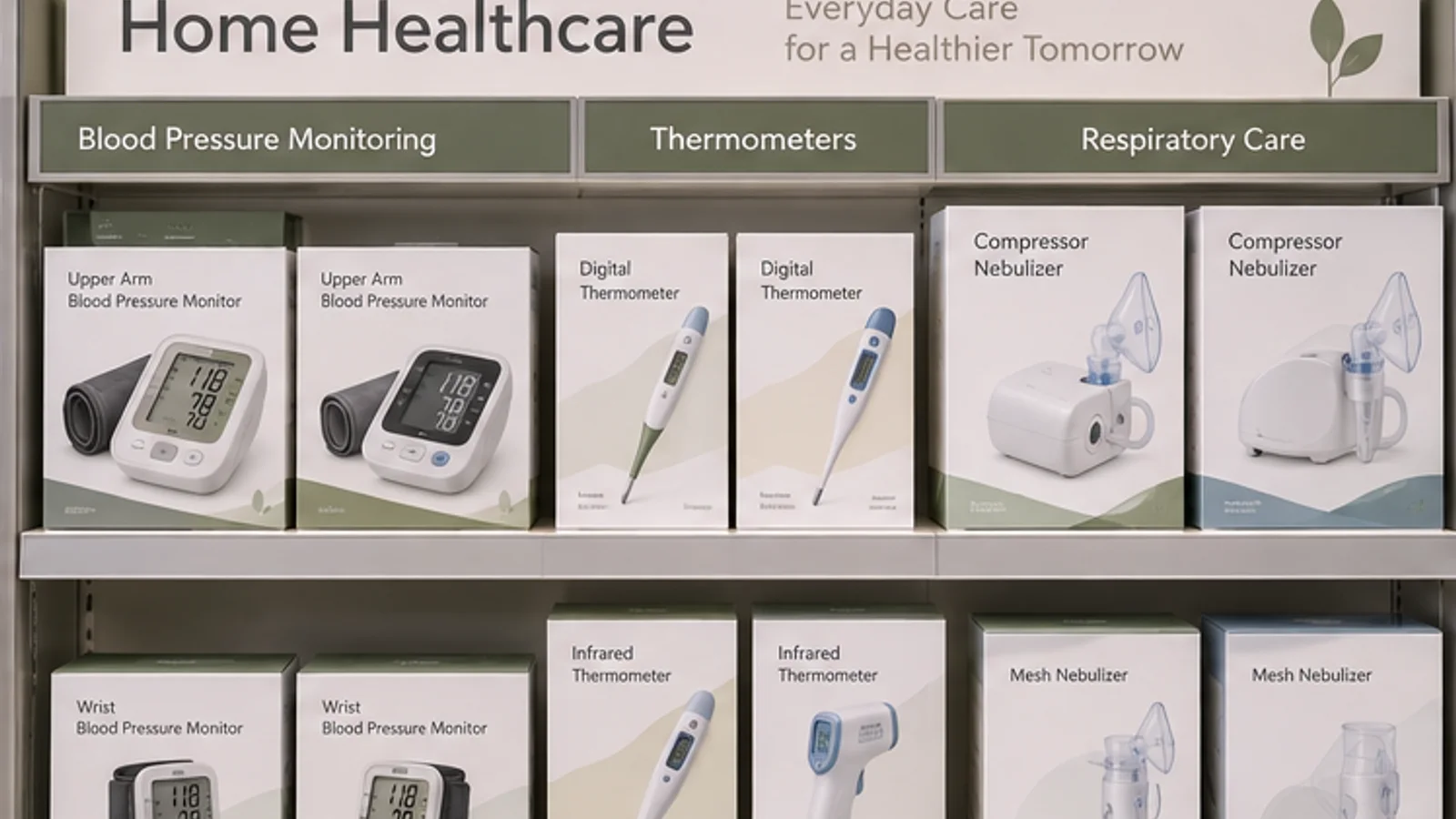
A pharmacy brand usually benefits from consistent packaging language, but consistency should not make different products look confusingly similar. Buyers can use shared design elements, such as brand color, typography and information hierarchy, while keeping product photography, accessory explanation and use-case wording specific to each category. This balance helps the range look unified on shelf or online while still helping customers understand what each device is for.
- Use a shared packaging system across the range.
- Keep product-specific information clear for each category.
- Review manuals and labels by product model, not only by brand template.

Use Documentation To Support Category Expansion
When a pharmacy brand expands across multiple home healthcare categories, documentation becomes more important. Product files, user manuals, labels, packaging materials and available quality documents may differ by category and model. Buyers should avoid assuming that documents from one product line apply to another. A simple document matrix can show what is available, what is under review and what must be confirmed by market or importer requirements.
- Create a document matrix by category and model.
- Track packaging, manual and label status separately.
- Confirm market-specific requirements before expanding the range.
Plan Launch Sequence And Replenishment
A pharmacy buyer may choose to launch a focused core range first, then expand after channel feedback. This can reduce packaging complexity, inventory risk and document workload. The buyer should decide which categories are essential for the first phase, which products support seasonal or promotional needs and which products require more education. Replenishment planning should be considered early so packaging, carton and supplier communication can support repeat orders.
- Define a core range before adding secondary categories.
- Plan replenishment expectations together with packaging and documentation.
- Use channel feedback to guide later category expansion.
Work With Linova-X On Category Review
Linova-X can help overseas buyers review available home healthcare product platforms, private-label materials and documentation by category. A useful inquiry includes target market, pharmacy channel type, first-phase categories, preferred packaging direction and any required document list. The final product line should be practical, explainable and supported by confirmed project materials rather than a broad assortment created only for catalog size.
- Share target market and first-phase category priorities.
- Review product platforms, packaging and documents together.
- Build a range that the sales channel can explain clearly.
Useful Links For Sourcing Review
FAQ
Should pharmacy brands source every home healthcare category at once?
Not always. A focused core range can be easier to explain, document and replenish before expanding into additional categories.
How should buyers choose the first categories?
Start with customer needs, channel fit, available documentation and packaging readiness rather than catalog size.
Can one packaging template cover all products?
A shared brand system can help, but each product category still needs clear product-specific information, manuals and labels.
What should buyers prepare for a product line review?
Prepare target market, channel type, first-phase categories, packaging expectations and any document requirements.