Treat Compliance As A Project Review, Not A Slogan
CE, RoHS and FDA are often mentioned in medical device sourcing conversations, but buyers should avoid turning them into simple sales labels. The right question is not whether a supplier can mention a region or regulation in general. The right question is what documents, product files, label materials and market steps apply to the selected product model and destination. This article is not legal advice. It is a sourcing framework that helps OEM buyers organize compliance questions accurately before quotation, sample approval and packaging release.
- Connect every compliance question to a product model, target market and intended channel.
- Do not use unverified marks, approval numbers or legal claims in packaging or article content.
- Involve the buyer's importer or compliance consultant when market-specific decisions are required.
Understand What Each Topic Usually Means In Sourcing
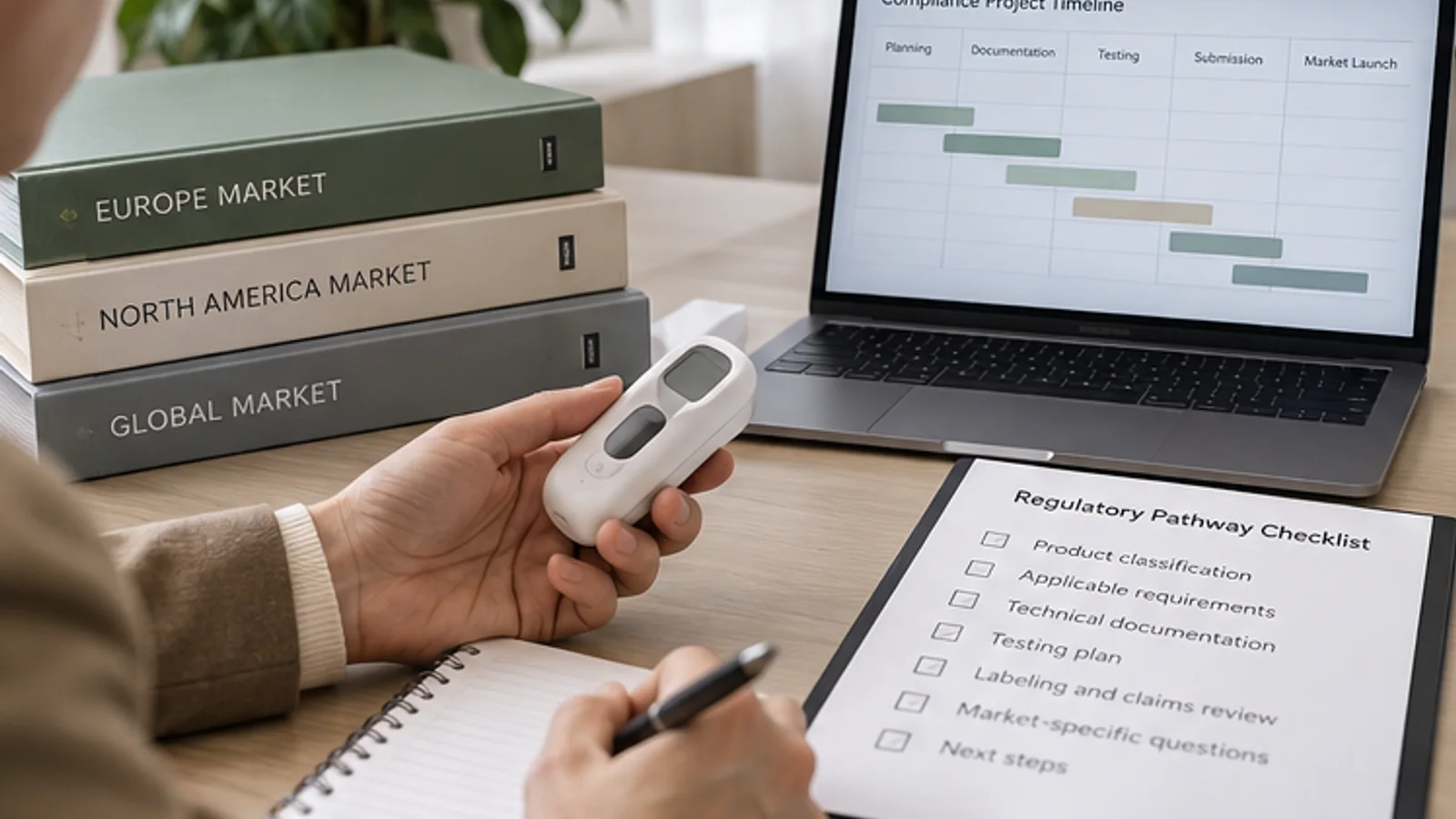
In sourcing conversations, CE is usually discussed in relation to European market requirements for applicable products, RoHS relates to restricted substances in electrical and electronic equipment, and FDA pathway questions relate to US market device requirements. The practical point for a buyer is to avoid broad assumptions. Product classification, intended use, labeling, importer responsibility and available documentation may all affect what needs to be reviewed. A supplier can help organize project materials, but the buyer should confirm the exact pathway with qualified market support.
- Use CE, RoHS and FDA as review topics, not automatic proof statements.
- Ask which documents are available for the exact model under discussion.
- Separate electrical-material questions, medical device questions and labeling questions.
| Topic | Buyer Question | Project Review Focus |
|---|---|---|
| CE | What applies to this product type and target EU market? | Product model, technical file discussion, labeling and responsible party review. |
| RoHS | Does the electrical product require restricted-substance review? | Material and component evidence according to the selected product. |
| FDA | What US pathway questions apply to the device category? | Classification, listing or clearance questions handled through appropriate market review. |
| Labeling | What wording can appear on package and manual? | Avoid unverified compliance claims and align with confirmed documentation. |
| Supplier evidence | What documents can be provided for sourcing review? | Separate company materials from product-specific documents. |
Avoid The Common Packaging And Claim Mistakes
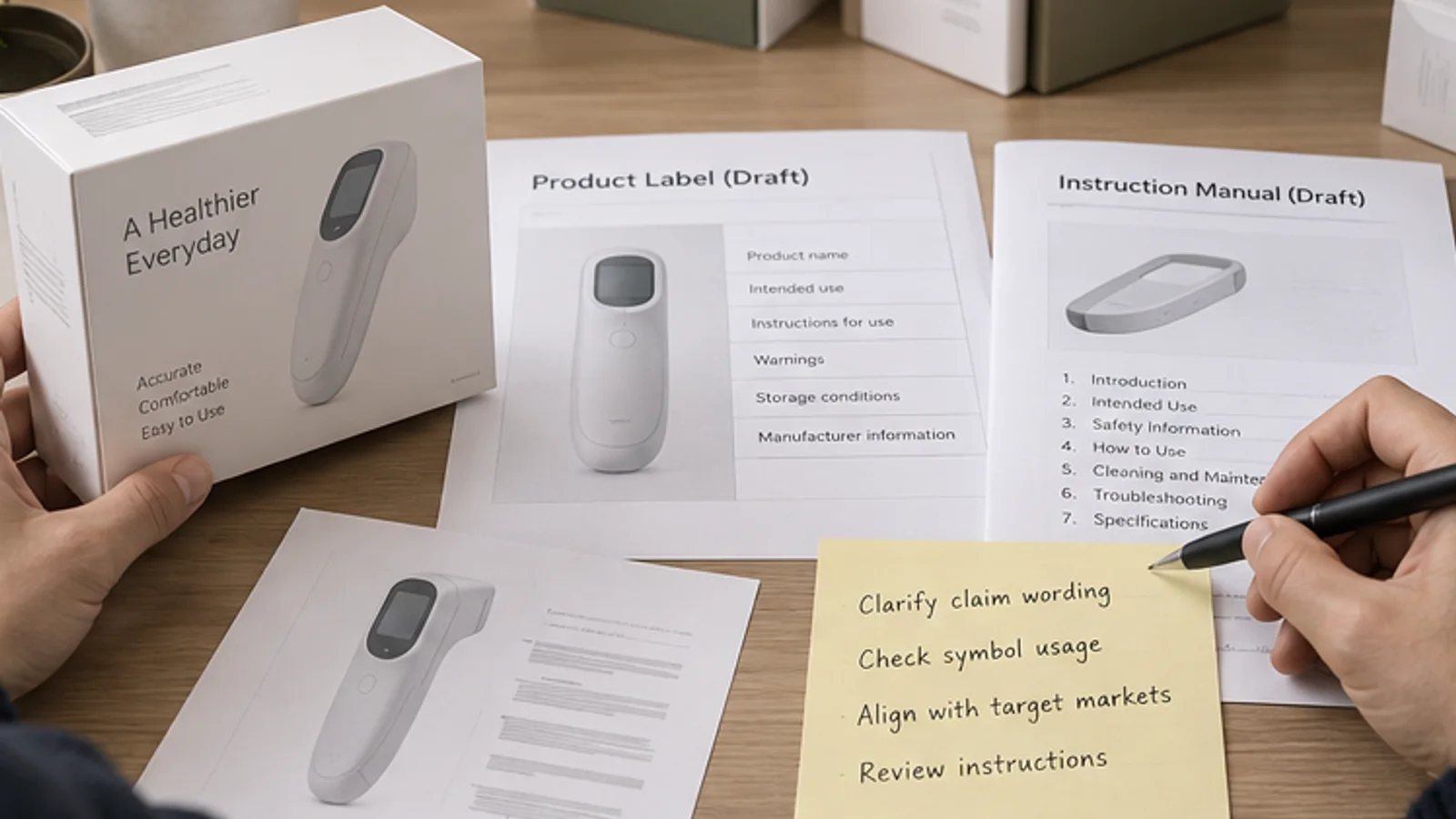
Compliance risk often appears in packaging and marketing materials before it appears in a purchase order. Buyers may want to add icons, approval wording or market statements to a private-label box because competitors show similar language. That is not a safe sourcing method. Labels, manuals, product pages and cartons should use only confirmed information. If a claim, symbol or number cannot be supported for the specific model and market, it should remain out of the artwork until the buyer has confirmed the requirement and evidence.
- Do not add certification marks or approval wording as decoration.
- Check whether claims in brochures, manuals and packaging match available product documents.
- Keep draft artwork conservative while compliance questions are still open.
Ask For Evidence In The Right Order
A strong review sequence starts with product selection, then document availability, then market-specific question handling. If the buyer asks for all documents before selecting a model, the supplier may only be able to respond broadly. If the buyer selects a model first, the review can move into product files, labeling, manual, quality materials and available validation information. This structure makes the discussion more accurate and reduces the risk of mismatched documents being attached to the wrong product.
- Confirm model direction before requesting product-level documentation.
- Ask for available documents by product, not by general company category.
- Record open questions for the buyer's compliance consultant or importer.
Where The Supplier Can Help
A supplier can help buyers organize available product files, quality-system materials, inspection information, labeling materials and packaging samples. The supplier can also explain which items are part of the current product platform and which require project confirmation. The supplier should not replace the buyer's market-specific legal or regulatory review. This distinction keeps communication accurate and protects the project from exaggerated statements that can create delays later.
- Use the supplier for product and documentation organization.
- Use market specialists for local regulatory interpretation where needed.
- Keep written records of what has been provided and what remains under review.
Build A Compliance Question List For OEM Projects
Before launching packaging or sample approval, OEM buyers should prepare a concise compliance question list. Include product category, target market, intended channel, selected model, needed documents, label language requirements and any importer requests. Linova-X can review available product and company materials against that project brief. The final market pathway should still be confirmed by the buyer's responsible market team or qualified advisor.
- Prepare compliance questions before final artwork approval.
- Keep the review factual and model-specific.
- Use neutral sourcing language when final market requirements are not yet confirmed.
Useful Links For Sourcing Review
FAQ
Can an OEM supplier confirm CE, RoHS or FDA status for every market?
Buyers should confirm market requirements by product model and target market. A supplier can provide available documents, but local pathway decisions should be reviewed by the buyer's responsible market team.
Should compliance marks be added to packaging during design?
Only confirmed marks, claims or statements supported for the selected product and market should appear on packaging, labels or manuals.
What should buyers ask before requesting documents?
Identify the product category, model direction, target market, sales channel and required document list so the supplier can respond with relevant materials.
Is this article legal advice?
No. It is a sourcing framework for organizing compliance questions. Buyers should use qualified local support for legal and regulatory interpretation.